by Michael Beas
from http://www.thebookrevue.com
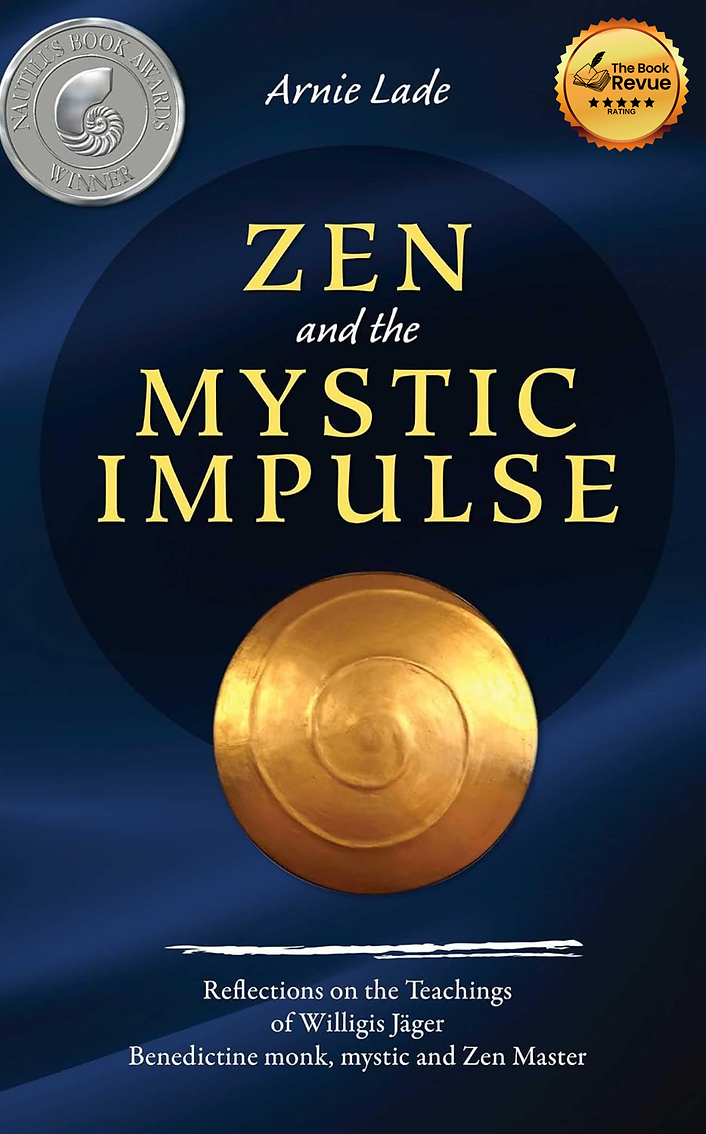
Arnie Lade spent fifty years practicing and teaching acupuncture and energetic healing, and somewhere in the middle of all that he encountered Willigis Jäger, a Benedictine monk, priest, and Zen Master whose teachings would quietly reorganize everything Lade thought he understood about spiritual life. Zen and the Mystic Impulse is his account of that encounter, and it is one of the most genuinely humble and luminous books in the current contemplative literature.
The figure at the center of the book is remarkable in his own right. Willigis Jäger was not a man who inhabited the boundaries between traditions; he dissolved them. A Catholic Benedictine and a fully authorized Zen teacher simultaneously, he spent his life pointing toward what he called the Sophia Perennis, the universal spiritual connection underlying all religious traditions. For Jäger, the mystic impulse was not the property of any particular faith. It was the deep human yearning for connection with something beyond the self, and it called to people regardless of the path they walked.
What makes Lade’s treatment of these teachings so trustworthy is the intimacy behind it. This is not a scholar writing about a subject. It is a student writing about a teacher who changed him, with all the specific, irreplaceable texture that kind of relationship carries. Richard Bryan McDaniel, author of The Story of Zen, called it deserving of a slow, reflective reading, and that assessment is exactly right. The book rewards patience. It is not trying to impress you. It is trying to create space, which is a considerably more difficult thing to do on the page.
At 133 pages, it does not overstay its welcome. Lade knows that the kind of wisdom Jäger embodied cannot be explained into someone. It can only be pointed toward, and he points with great care.
For anyone who has sensed that the mystic impulse exists in themselves but has never quite found a tradition that fully holds it, this book is a gentle and genuinely expansive guide toward that deeper belonging.

